Portable Karaoke Machine Specs Explained: Driver Size, Screens & Zero-Lag TV Setup
Karaoke listings love to advertise '500W Peak Power' on a 3-pound plastic speaker. Here is how to read the four engineering specs that actually determine vocal clarity, bass punch, and lyrics convenience.
Driver Diameter (8" vs. 3.5") Beats Inflated Peak Wattage
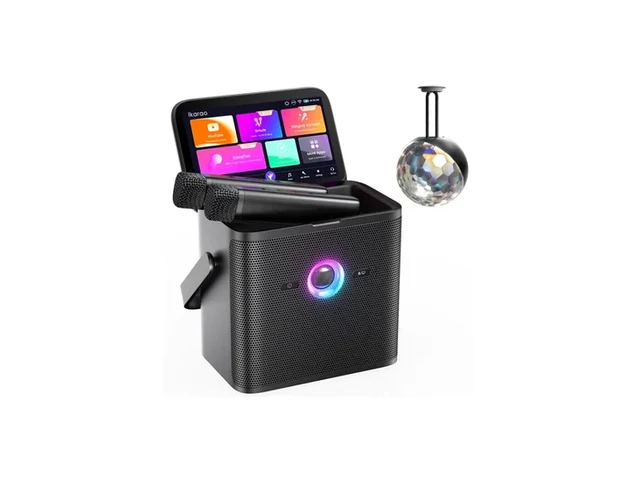
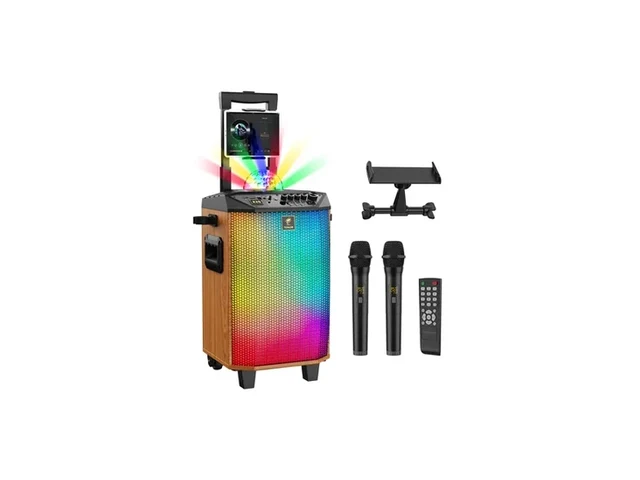
Peak wattage measures only a millisecond burst before clipping. To know how loud and full a portable karaoke speaker actually sounds, check the woofer diameter and cabinet weight. The TONOR K20 uses an 8-inch subwoofer in a 13.8-pound rolling cabinet; the Ikarao Shell S1 uses dual 3.5-inch neodymium woofers + dual 1-inch tweeters (104 dB SPL) in an 11.7-pound acoustic enclosure.
Rule of thumb: For backyard or 15+ person parties, look for at least an 8-inch single woofer or dual 3.5-inch woofers weighing 11+ lbs.
Lyrics Display Architecture: Built-In Touchscreen vs. Smart TV Cast vs. Tablet Cradle
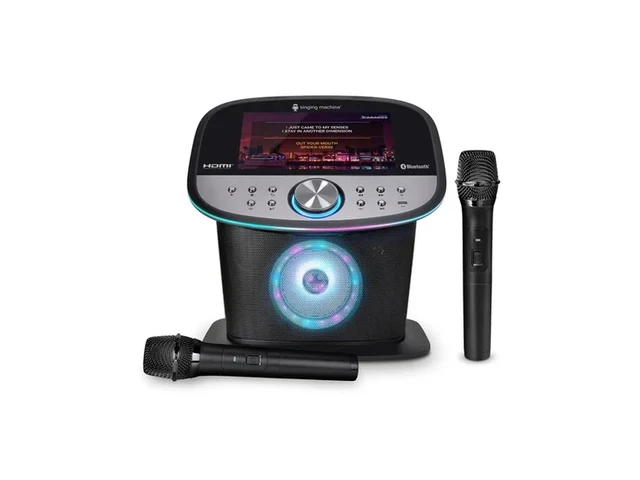
There are three ways to read scrolling lyrics: (1) an integrated WiFi touchscreen (Ikarao Shell S1's 10.1" screen or Singing Machine ISM9025's 7" screen) with HDMI output to mirror to a TV; (2) a wireless TV casting hub (Singing Machine ISM9011); or (3) a molded slot on top of a PA speaker (TONOR K20) where you rest your own iPad or phone.
Rule of thumb: Choose a built-in screen + HDMI if you want zero setup friction; choose a PA cradle if you already have an iPad.
Wireless Microphone Charging & UHF Stability
Cheap karaoke sets fail when one microphone runs out of AA batteries mid-party. The Ikarao Shell S1 solves this with two magnetic self-charging docks built directly into the speaker cabinet (20 hours of mic runtime). The TONOR K6 and K9 include USB-C rechargeable wireless mics.
Rule of thumb: Always check whether the included wireless mics recharge via USB-C/dock or require disposable AA batteries.
How to Connect to a Smart TV With Zero Vocal Echo/Lag
Never pair a karaoke machine's output to a Bluetooth soundbar or TV Bluetooth receiver—the digital buffer delays your voice by ~200ms. Keep all vocal and music audio coming directly out of the karaoke machine's own speakers, and send only the video signal to the TV over HDMI.
Rule of thumb: Audio stays on the karaoke speaker; video goes to the TV.
3 benchmark picks
Ready to pick?
Questions
Why do my vocals lag behind the lyrics when I connect a karaoke machine to my Smart TV via Bluetooth?
Standard Bluetooth audio introduces 150 to 250 milliseconds of encoding delay—fine for passive music listening, but fatal for live singing. Always let your karaoke machine's built-in speaker play your vocals and backing track directly, and use HDMI (Ikarao Shell S1, Singing Machine ISM9025) or WiFi screen casting (ISM9011) only to display lyrics on the TV.
Should I get a karaoke machine with a built-in screen or use a tablet/TV?
A built-in 10.1-inch HD touchscreen (like the Ikarao Shell S1) is the fastest plug-and-play setup because nobody has to surrender their phone or fumble with cables, and it still has an HDMI port when you want lyrics on a big TV. If you want maximum outdoor bass per dollar, pair your existing tablet with the 8-inch TONOR K20 PA speaker.
How many microphones come in the box?
Six of our top picks (Ikarao Shell S1, TONOR K20, TONOR K6, TONOR K9, Singing Machine ISM9011, and ISM9025) include 2 microphones right in the box for duets. The SML385BTW and VTech Kidi Star include 1 wired mic.
Why don't you list static dollar prices or star ratings?
Amazon prices and promotional coupons change constantly. Click 'Check price on Amazon' on any card to check current pricing and stock.